A Big Batch of News Clips from The Gazette, Aug. 9 1943
Monty Heaps High Praise Upon Canadian Troops

"From original caption: "Canada launched its first Lancaster on Friday
and sent it overseas..." Photo found in The Gazette, details below
Introduction:
British, American and Canadian armies have not yet reached Messina or swept remaining (retreating) German forces off the island of Sicily. It won't be too long before stories and photographs appear in The (Montreal) Gazette that depict the end of Operation HUSKY, begun July 10, one month earlier.
Two weeks ago, January 19, 2026, Cyclone Harry battered parts of the eastern shoreline in Sicily, including an area I visited with my son Paul in September, 2023 (80 years after the invasion of Sicily). Santa Teresa di Riva was central to our visit and the damage done to the shoreline will take many months, perhaps a year or more. Scars related to the upheaval, psychological and physical, will last much longer. "Do you remember when Cyclone Harry....?" will surely last for decades.

Areas affected by bad weather are seen along the seafront in Santa Teresa
di Riva, Sicily, Italy, 21 January 2026. (Feb. 3, 2026, EPA)
Looking north, then south from the beach at Santa Teresa di Riva in September 2023:


Photos GH
The same is true about damage done to the island of Sicily during WWII. While exploring the inside of a cave in Sept. 2023 a few miles north of Fontane Bianche (home to the 80th Flotilla of Canadian Landing Crafts (LCMs) in 1943), a 70-year-old doctor (we met him and his grandson during a hike along the coast) recalled family memories related to WWII.
"My grandmother lost her house during the Allied invasion. And an uncle was killed," he said solemnly.
No joy lived in those words. But the scars related to WWII live 'just below the surface' of many, many Sicilians to this day I am certain. And next time Paul and I visit Sicily we will be wise to remember that short conversation.
And now, on with the show:

Monty heaps praise upon the Canadian Army in Sicily:

I think that praise from a commanding officer really meant something to the men who received it. At least it did to my father (RCNVR/Combined Operations). In his WWII memoirs - written in the early 1970s - about his month in Sicily he writes:
(We) The men under a new commanding officer did yeoman work, although working long hours, under fed and pestered severely by Stukas and JU88s. The stokers kept the landing craft running, if not on two engines then on one (no down time) and the Canadian Flotillas* were highly praised by the British Admiralty and General Montgomery himself.
Their monkey mascot went bomb crazy and was buried at sea in a sandbag. It was a sad occasion when it was chucked overboard for our safety. "Dad, Well Done" page 75
Please click here to read more about 'their monkey mascot' (re the 80th Canadian Flotilla of LCMs).
A lengthy article to bring us up to date re where Allied armies are at this point:


Photo Credit: World War II, Operation Husky, 1943
In 1943, the 1st Canadian Infantry Division and 1st Canadian Army Tank Brigade followed an inland route up the centre of Sicily, acting as the left flank of the British Eighth Army during Operation Husky. Over 27 days, they fought through 240 kilometres of mountainous, tough terrain, advancing from the southern coast to the vicinity of Mount Etna before being withdrawn on August 6, 1943. AI Overview


Montgomery’s plan of attack was to drive northward along the east coast
of Sicily, with Patton’s U.S. Seventh Army protecting his left flank.
A U.S. map. No mention of Canadian Army attached to Monty's 8th.
Source: Warfare History Network


Three 44 Squadron Avro Lancaster B.Is in 1942. Source - Wikipedia


GH googled 'Normandie liner refloated in New York 1943' and AI offered the following:
As with the Avro Lancaster bomber, mentioned in an earlier news clip, images abound (including videos on YouTube; click here to view "Why SS Normandie Capsized in New York Harbour"):

The S.S. Normandie, a 1,029-foot-long ship, burned in a spectacular
blaze at a Manhattan pier in February 1942, and had to be removed over
17 months in the Hudson. Credit: The New York Times
From The New York Times we'll switch to an article out of London, England by Associated Press and cabled across the Atlantic Ocean to The (Montreal) Gazette. Brought to you by GH from London, Ontario, Canada via his iMac, built in the USA. It's about a new-found optimism:


The attack of Germany "across the Channel or the North Sea" is
still several months away. First came the long, tough slog for every
mile of the peninsula of Italy, beginning on September 3, 1943.

Wishful thinking? Mystery and intrigue? All this, even before AI was invented!


Lionel S. B. Shapiro, author of "They Left the Backdoor Open" ("Who is 'They'?" I won't tell you what it's all about, it would spoil the surprise!), is one of my favourite war correspondents, along with Ross Munro, especially as their stories relate to Sicily. Shapiro's lengthy columns under a specific heading are upcoming, as found on microfiche at the University of Western Ontario. Here he shares his account of "British and Canadian troops of the Eighth Army "swarming over the hills..." and earlier, "Monty's left hook":


Photo from Lionel Shapiro's aforementioned book, very close to GEORGE
Beach, home of the 80th Flotilla. This is likely HOW Beach, 2 - 3 miles to
the south, home of the 81st Canadian LCMs. Click here for more details.*
*If you don't like surprises.
"Canadian and British units captured Aderno" and more from other war fronts:

The following article takes us many miles from Sicily:

_and_HMNZS_Leander_firing_during_the_Battle_of_Kolombangara,_13_July_1943_(80-G-342763).jpg)
re Kolombangara: The cruisers USS St. Louis and HMNZS Leander firing
Click here for more about the 'Battle of Kolombangara' at Wikipedia.
Please click here for even more (a video) about the Battle of Kolombangara as found on YouTube.
And now a word from our sponsor, the people from Tic Toc!!

Juanita Rios, mentioned as "star of the broadway show, Star and Garter" in the above caption was actually listed as 'first girl' (a long way from 'star of the show) in the only list of characters I could find for Mike Todd's Broadway hit from 1942 - 43. I think Gypsy Rose Lee, featured on the Ed Sullivan show when I was a kid, was the real star.

Speaking of 'star of the show', the Lancaster was another one (one of many):


Please click here to view an excellent website re the Lancaster, how it came to be made in Canada (and many other features re WWII history).

Avro Lancaster B Mk. I (Serial No. R5727), built in the UK and
flown to Victory Aircraft in Malton, Canada in August 1942 to serve
as a pattern for the other Lancasters to be built in Canada.
CFJIC-DND Photo, PL-1173 via Don Smith)

405 (B) Squadron RCAF Avro Lancaster “Ruhr Express” being bombed up
for a mission over Berlin. Ground crews are steering two “cookies” (block-
buster bombs) into position under the bomb-bay. This aircraft was the first
Canadian built Lancaster. (Library and Archives
Canada Photo, MIKAN No. 4542805)
I think this cartoon is depicting Hitler's dilemma, i.e., the destruction of his once-powerful submarine fleet is out-pacing the German industry's ability to build new ones, replacements:

Another episode of "The Great Escape":

Like your mustard?

The Dieppe Raid occurred on August 19, 1942 and about two years later (two weeks shy since the following article was delayed from August 5th) members of the Canadian 1st Division exacted some revenge, balancing the scales to some immeasurable degree:


Private D.B. MacDonald of The Royal Canadian Regiment, who carries a Bren
light machine gun, near Campobasso, Italy, October 1943. Photo: Jack H. Smith.
From the Faces of War collection at Library and Archives Canada.
As found at The Regimental Rogue


"We just spit back at them." I think that many readers would say, "That's a pretty good response. I'd maybe do the same in the same circumstances."
My response is, "Hey, the guy was from London, Ontario, i.e., where I make my current home. I wonder if I can find any living relatives of Harvey Bonner in this fair city of mine and pass along the WWII article?"
I found 6 phone numbers for 'Bonner' in London (and I think I taught a Bonner back when I was a young teacher! Wouldn't that be a major league coincidence?!
So, I will call the 6 numbers to see if I can find a relative. If I do I will report back here.
On to Mr. Clapper's column. I wonder if he's in the phonebook?

Pause. I'll come to Clapper's Column in a few minutes. First, wouldn't this be a good time to remember a perfectly decent citizen of London, Ontario, who volunteered for the RCNVR in and around the same time as my father did in 1941 (their volunteer numbers are really not too far apart; Dad - V8801; Allan 'Addy' Adlington - V8786). He participated in Operation HUSKY, was injured while manning a gun turret during the landing of troops beginning July 10, 1943, and sent to hospital in one country then another. And he showed me the scar when I met him and his wife Mary about 15 years ago. I was writing for a local newspaper, mentioned my father's link to the RCNVR and he called me. "I trained and served with your dad during WWII," he said. My gosh, I've even got their wedding photo (given to me by Mary) and my Dad's best friend during WWII (Chuck Rose) stood up with Addy.
And it just so happens that when I was searching for one thing online I found another with Addy's picture on it. "I know this fella!" I said and then fell off my chair. I still carry the bruise. I'll show it to you sometime.
The following memorial page (and several pages re veterans I did not share here) was printed in honour of veterans from Dutton Township, and of the two Adlingtons listed on one page 'Addy' is the one with no link to Dutton mentioned, though all the others on subsequent pages had a defined link to that Township. I had the thought that maybe 'Addy' got included because he was listed on the same page with another Adlington, with described link to Dutton Township, though he did have a scar to prove he'd paid a heavy price for volunteering.


Being hospitalized in Scotland was fortuitous! 'Addy' had met a wee Scottish girl at a dance club in Glasgow (while on leave from a training camp in Irvine, Scotland in mid-1942). They were married in Glasgow (date?) and Mary later came to Canada via the SS Île de France, and fortunately not SS Normandie! Though she recalled to me that she did land in New York. Source - written memorial page and photograph (?)
Of course I have the wedding photo!

L-R: Chuck Rose (looking as if he has not done this before), 'Addy',
Mary, and Mary's sister, just a bit more 'wee' than Mary
And then there's the 'Addy' Adlington and 'Cactus' (and 'Dogo') Harrison connection:
%20copy.jpg)
Eight of the first 50 Canadian ratings to volunteer for Combined Ops.
L- R: Al Adlington, Joe Spencer, Chuck Rose, Doug Harrison*, Art Brad-
field, Don Linder, Joe Watson (with a large bee on his face?) At HMS
Northney (one of 4 camps, (I - IV), Hayling Island, Jan.- March, 1942
*Doug's nicknames, i.e., 'Dogo' or 'Do-Go' and 'Cactus') may be related to (a) his poor guitar playing (the guitar was purchased in S. Africa on his way to Sicily) as in "Do go somewhere else with your fumbling around off-key", and (b) his quick, sharp and prickly reactions to impertinent questions or being criticized. 'Like father, like son' rings true with me... but only occasionally. "I said, only occasionally!!"
Back to Clapper's Column:


Please click here to read a fine tribute to Fred Painton (mentioned in the second to last paragraph above) by U.S. war correspondent Ernie Pyle, seen in the photograph below:
Fred Painton: A Tribute, Saturday, April 28, 1945
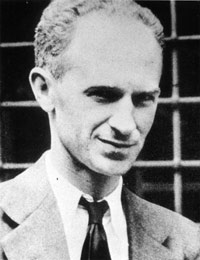
In his last published column, which was issued posthumously, Pyle honors
the memory of a fellow war correspondent. Indiana University Archives


Another informative article by Lionel Shapiro (maybe he knew that Ross Munro was taking a day off):

Ross Munro and Bill Stewart of the Canadian Press with Lionel Shapiro
(right) in France, August 1944 (Library and Archives Canada)
Found with an excellent article at World War II on Deadline


Map of Canadian Operations in Sicily, 10 July to 17 August 1943.
Map drawn by C.C.J. Bond, in C.P. Stacey, The Canadian Army 1939-
1945: An Official Historical Summary (1948), Dept. of National Def.


RAF air raids reduce the German industrial war effort by... well, do the math!


More of, do the math!


HMCS Grou K518. Photo and more navy history can be found here


The battle for Troina, "a well-earned, hard-fought victory":

Finishing on a positive note - send books (and some Christie's biscuits, please) - it's a wartime duty!


Please click here to view Editor's Research: Three Months in the Mediterranean, 1943 (29)
Unattributed Photos GH
Unattributed Photos GH


No comments:
Post a Comment